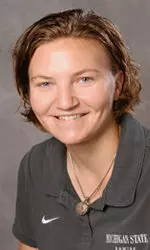
Getting To Know Stacey Rippetoe
September 30, 2008 | Women's Rowing
Sept. 30, 2008
BU All-Access Radio Interview with Rippetoe
Stacey Rippetoe enters her first year with Boston University's women's rowing program after helping guide the Michigan State women's rowing team to two Big Ten Championships and a program-best sixth-place team points finish at the 2008 NCAA Championships regatta. The 2007 CRCA Central Region Assistant Coach of the Year spent eight years, including the last two as associate head coach, with the Spartans.
Q: What do you love about the sport of rowing?
A: That the sky is the limit and that you can always keep getting better at it, either by being more fit or being more effective with your stroke. It's largely about effort and increasing your talents.
Q: How'd you get involved with rowing?
A: When I went to the University of New Hampshire for my freshman year, I was tall and rode my bike all over the place. At that time, they were looking for people who were tall and athletic and didn't know how to row. I learned to row there and then later transferred to Rutgers University.
Q: Did you play any other sports?
A: I played basketball and soccer and of course spent a lot of time on my bike.
Q: What was it about rowing that grabbed your attention?
A: That it was non-contact, so there were not a lot of surprises. It was a very predictable sport, and you could work as hard as you wanted and be extremely aggressive but not hurt someone else.
Q: So how did you become a coach?
A: Actually, it happened by accident. I started at a little club in New Jersey called Navesink River Rowing. There was a women's quad with an empty coxswain's seat. They saw me there one day. I was supposed to be rowing in singles and they asked, "Why don't you hop in here with us and tell us what we are doing and give us a little help." They then hired me as their coach, so it all started there.
Q: Why did you choose to come to Boston University?
A: I felt that the administration was behind the program. When (Deputy Director of Athletics) Drew Marrochello contacted me, he was really positive about wanting to see the program achieve success, wanting them to be national championship caliber, and wanting them to perennially be at the NCAA. The program has a lot of strong support through the university, and it seemed like a place that I could be competitive and help the team win.
Q: What did you learn during your time as an assistant coach at Michigan State?
A: I just learned about everything, as it was a great place to work. Under two of the best head coaches in the country, Bebe Bryans and then Matt Weise, I learned specifically from Bebe how to communicate with people to help them achieve their goals, how to tap into what they really want and help them understand what it means to them, so that they work hard enough to achieve more. With Matt, it was how to find what's important to people and help them use that to compete, even at practice, and how to make things competitive enough so that practice truly matters.
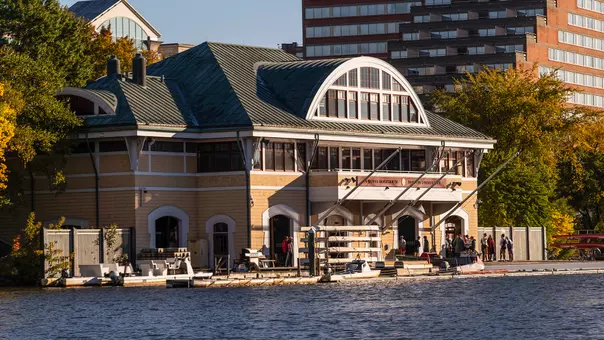
Q: What are your first impressions on the DeWolfe Boathouse?
A: It's an amazing facility. I'm trying to gather from the athletes what they love about being at BU and why they chose to come here, and all of them mentioned the boathouse. Rowing on the Charles River is an amazing experience. Because the boathouse is in Cambridge on the other side, everyone can see it from the university.
Q: What makes the boathouse so special?
A: Well, primarily it's the starting point for the Head of the Charles, which is such a huge competition. There are thousands of people from all over the world who race that one event, so for us to be such an integral part of that each year is very special. Also, rowing is a big sport in the community, so when we are on the river, we see great athletes of all ages from high school students just starting out, to people in their 70s and 80s who are competing every day, so it's special to be part of that culture.
Q: What are your initial impressions of this year's team?
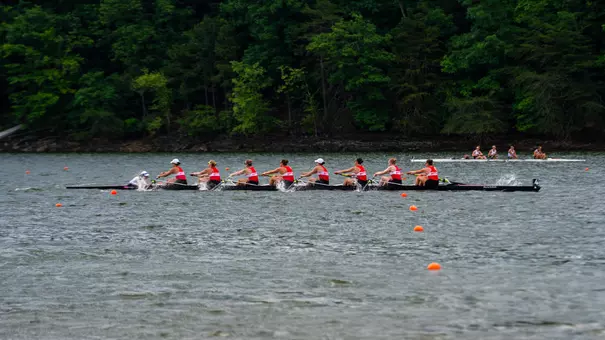
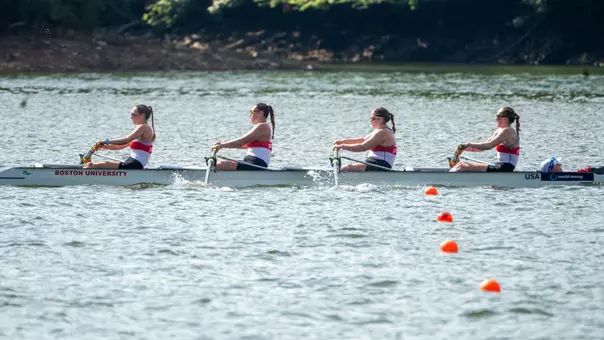
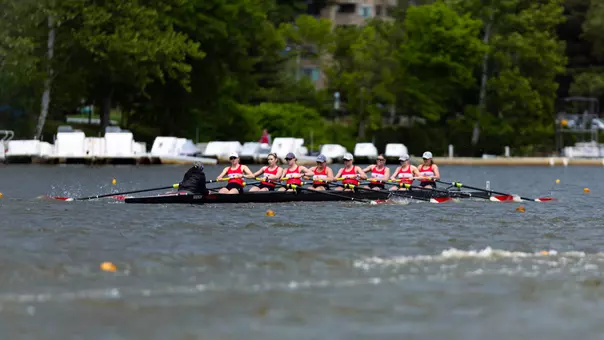
A: They are ready for anything, and I cannot say enough good things about how well they have responded so far to our training. We are doing a lot of miles on the river, and they have been really great about it. I've pushed them hard, and they've been nothing but enthusiastic about it. They are willing to work hard, and I think that's the best feature of the team. They are curious about what they can do. They are willing to put in the work, and they are willing to take calculated risks to find out how good they can be.
Q: What about the sport of rowing do you hope they learn during your first year?
A: They are going to find out a lot about themselves. Everyone at some point chooses a challenging career or at least goes through a challenging moment in their lives. They are going to be stretched to a point where they start to have doubts about their capacity to meet the demands. What rowers and most endurance athletes have as an advantage in life is that they have gone through that experience in their sport. They have been pushed hard enough in their sport where they asked those questions about themselves and then chose to move forward. What I hope the rowers get out of the sport and keep persisting in is that they are always going to have those lessons from rowing. They will know how to push themselves and how to respond well to the obstacles so that they can continue to perform. Hopefully, that will keep them involved with the sport for the rest of their lives.
Q: Who do you expect to step up and be a leader this year?
A: It's really anyone's game right now, which is the best part about it. The seats in the varsity eight are wide open. If anyone wants to step up and perform, they going to get a shot in there. There are of course people who are already doing a great job. Lee Persse and Kelsea Gusk have been doing a great job, but the whole team has been strong so far. The freshmen have done a really nice job coming in fit as well, particularly Cheryl Copson and Ally Brooks. They have joined the team ready to contribute, and that's great to see.
Q: What type of students will you be looking for to join this program in the future?
A: I want people who most of all are ready to work hard and work within an established system, so that whatever the team's standards are, they are ready to apply themselves within that system. We have a sign up in the boathouse that each person sees which says, "Desire, Determination, and Dedication." So finding someone who's ready to give herself over to that and be part of something great. I want to see BU return to the time when attending the NCAAs was an expected ending to the season, and that's going to take a lot of work. The team knows that it's not going to be easy, and they have embraced the challenge. What we are looking for in recruiting is people who understand that we set big goals and do the work to achieve the goals.
Q: What other goals have you set for yourself this season?
A: I want to connect with the alumni. We have a huge history here and because I'm new, I look forward to learning all the stories from people who had great success. I want to learn how they did that and what being part of BU Rowing has done for them up to now.
Q: The Head of the Charles is coming up, and that obviously brings a lot of alumni back to BU. How excited is the team about the event as the date approaches?
A: It's going to be great. There will definitely be a lot of new experiences, but I think that I can prepare the team to perform well. We also look forward to reconnecting with everyone who returns to this boathouse. The weekend will be very special.
Q: Finally, what are your expectations for this season?
A: We want to see the team be competitive in sprints. I think if we can be in the top three for sprints, we'll have a great shot at qualifying for the NCAAs, but it also depends on how the other crews around the nation fare. I think that we can be an NCAA contender. I don't see why we have to wait. We are not going to rebuild. We do not have to reinvent the wheel. What we have to do is work harder than in the past and apply ourselves more effectively as well. The team has to build on what they already have, and I don't see why we can't do that. The students have accepted the challenge and jumped in with both feet.